By Brian French | April 4, 2026
The Central Florida Frontier: Why the Next 25 Years Belong to the Inland Corridor
The real estate narrative in Florida is undergoing a seismic shift. For decades, the strategy was simple: “Go South” or “Go Coastal.” But as we move through 2026, the geography of Florida has reached a physical tipping point. The coastal giants are hitting their limits, and a new “center of gravity” is emerging in the heart of the state.
South Florida: The Everglades Ceiling
In Miami-Dade, Broward, and Palm Beach counties, the math for large-scale horizontal development no longer adds up. South Florida is effectively a “U-shaped” strip of land caught between the Atlantic Ocean and the Everglades Urban Development Boundary (UDB).
With the protected wetlands to the west and the ocean to the east, there is nowhere left to build but up. For developers, this means astronomical land costs, complex vertical zoning, and a total lack of raw acreage for traditional neighborhoods. South Florida has reached “max buildout,” turning the region into a market defined solely by luxury infill and high-density redevelopment.
Tampa and St. Petersburg: The Small-Lot Squeeze
On the Gulf Coast, the story is one of geographic confinement. St. Petersburg is situated on a peninsula, surrounded by water on three sides. While demand is sky-high, the inventory is constrained by historic, small-lot sizes and a total lack of scalable acreage.
In Tampa, most “new” developments are actually scrape-and-rebuild projects or small-scale townhome infills. The “urban core” is dense, and the suburbs are hitting the limits of existing infrastructure.
“While the coasts are fighting for every square inch, Central Florida is measuring its opportunity in square miles.”
Central Florida: The Hundred-Mile Canvas
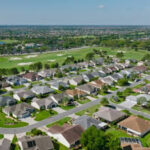
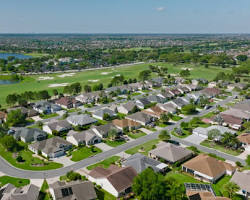
Central Florida—specifically the regions encompassing Polk, Lake, Osceola, and Sumter counties—represents the last great frontier for American master-planned communities. Unlike the coastal hubs, this region offers hundreds of square miles of former ranch and citrus land that is now being rezoned for the next generation of living.
This isn’t just about “sprawl”; it’s about Master-Planned Communities (MPCs). Developers in Central Florida have the unique luxury of a “blank slate” to build entire ecosystems that include:
- Integrated Tech Hubs: Smart-city infrastructure built from the ground up rather than retrofitted.
- Sustainable Water Management: Massive lagoons and eco-friendly irrigation systems that coastal cities simply cannot accommodate.
- Multi-Generational Housing: From active-adult living (like the expansion of The Villages) to sprawling family estates—all within the same master plan.
Regional Development Comparison
| Region | Development Barrier | Typical Strategy | Growth Horizon |
| South Florida | Everglades / Atlantic | Vertical / High-Rise | Mature (Maxed Out) |
| Tampa / St. Pete | Water / Peninsula Limits | Small-Lot Infill | Heavily Constrained |
| Central Florida | None (Vast Acreage) | Master-Planned Communities | 25+ Year Runway |
The 25-Year Vision
Experts predict that the I-4 corridor and the surrounding counties will see more horizontal growth over the next quarter-century than any other region in the Southeastern United States.
With the expansion of the Brightline high-speed rail and the continued migration of the tech and medical sectors to the “Center of the State,” Central Florida is no longer just a place people visit—it is the place where the future of Florida is being built. For those looking for long-term land banking or the next great residential boom, the map points inland.